




ABWEHR WIRELESS SERVICE.

In the many states of the Southeast and Balkan regions, secret reconnaissance operations had been carried out by the Abwehr prior to the beginning of the invasions. After the occupation of these countries, there existed a large number of Abwehr offices and sub-offices, and after the renewed transition to mobile warfare during the course of the retreat and the extensive partisan activities, another large Southeast Front Reconnaissance Organization emerged from the originally fixed and mobile Abwehr organizations within the area of Army Group F of the Commander-in-Chief Southeast.
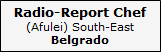
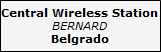
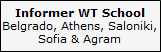
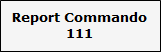
The associated units of the Secret Reporting Service with Abwehr tasks I, II, and III, under the communications leadership of the Southeast Abwehr radio director, as well as the locations of the formations in mid-1944, are shown below.
The associated units of the Secret Reporting Service with Abwehr tasks I, II, and III, under the communications leadership of the Southeast Abwehr radio director, as well as the locations of the formations in mid-1944, are shown below.





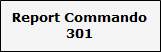
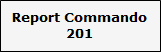












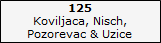

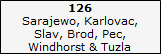










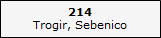

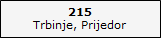


















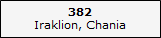



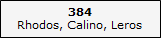













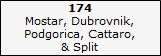

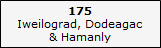










Remarks:
Units 124, 125, and 126 were deployed as “bandit reporting posts,” and units 127, 128, and 129 as radio-reporting posts for prepared intercept stations after being overrun during the retreat.
Together with the Command Reporting Area Vienna, they maintained connection to the radio networks of the Command Reporting Area Turkey (Middle East) and the Reporting Area Bulgaria.
The personnel strength of the radio station of a Front Reconnaissance Command was set in February 1944 by the Central Department of the Office of Foreign Affairs/Abwehr at an average of 1 officer, 1 sergeant, 3 corporals, and 7 radio operators. Commercial receivers were often used, such as the Siemens R-IV or the Philips HMZL.
On the transmitter side, frequency-variable types were generally used, mostly the S 89/80 and S 90/40. Unlike in the large radio centers in Hamburg or Belzig, at the radio reporting posts and the radio stations of the Abwehr commands, transmitters and receivers were often housed under one roof for reasons of space.
Radio station of a Front Reconnaissance Command with shortwave receiver Siemens R-IV (left) and transmitter SE 90/40.
For the larger radio stations of the Front Reconnaissance Commands, it was sometimes possible to procure Wehrmacht receivers of the types Kw.E.a and Fu.H.E.c, because these stations often had to monitor newly deployed radio agents for days or weeks and later also take over regular agent radio traffic.
In the organization further down and closer to the front, the Abwehr or Front Reconnaissance teams operated, which were usually attached to the staffs of the Army High Commands. According to the organizational directive of 25 February 1944 issued by OKW Office of Foreign Affairs/Abwehr, the radio crew of a team consisted of one corporal and three radio operators. Accordingly, the technical equipment was modest; a FAT radio trucks of the time, radio team Leopard. Such improvised radio trucks were built by rear-area Abwehr offices on their own initiative from passenger cars of all kinds, by removing half of the passenger compartment and replacing it with a small box-type structure as a radio cabin. The equipment consisted of an SE 85/14 with an inverter for connection to the car battery, or the Radione radio equipment set with the R 3 receiver and RS 20 transmitter.
At the lowest level of the Abwehr radio network were the frontline reporting posts and the radio agents, who were usually located in enemy territory. The reporting posts were deployed by the front reconnaissance teams at suitable locations along the front in order to smuggle agents through the front into enemy-held territory and, if possible, await their return. The reports brought back by the agents were then transmitted “to the rear” immediately by the reporting-post radio operators.
The author of this book was in the summer of 1944 a reporting-post radio operator in the area of the Pripyat Marshes. This region, named after the Pripyat River, located in the south of Belarus and the northwest of Ukraine, is with about 90,000 square kilometers, the largest swamp region in Europe. Because of the unclear front line there, the smuggling of agents was successful over a period of several weeks. After the breakthrough of Soviet troops through the Pripet Marshes, the author was transferred to an Afu school of Abwehr II in Klein-Gablau (today Jablowo), which belonged to a V-man camp in Preußisch-Stargard under the command of Lt. Göttler and was part of Front Reconnaissance Command 203, OTL Arnold, located in Lentschütz.
The superior Front Reconnaissance Headquarters II-East, OTL Ernst zu Eickern, had been located since mid-1944 in Bischofswiesen Castle near Bischofsfelden in the Warthegau.
After Abwehr II was taken over by the RSHA, the front reconnaissance units had to transfer younger personnel in particular to the “tank-hunting units” formed by Skorzeny that were operating behind Soviet lines.
Thus, around the turn of the year 1944/45, the author found himself once again serving as a radio operator with such a German-Russian suicide commando, under Red Army winter coats the Germans wore Wehrmacht uniforms, the Russians wore Red Army uniforms. The group was supposed to hide at temperatures of around –35° in a forest area called Lutauer Forst and allow itself to be overrun by the advancing Red Army.
What would have been necessary for tank hunting, explosives, detonators, ammunition, as well as spare batteries for the radio set, etc. was supposed to be delivered by airdrop.
The successful letting themselves be overrun was the first and last radio message the author was able to transmit, for after only a few days, the batteries of the SE 109/3 they carried had died due to the cold.
Because the resupply planned by airdrop also failed to arrive, the group began to retreat westward toward Danzig, about 50 km away.
By that time, the Red Army had already advanced several kilometers further west, and during the breakthrough from behind through the thinly manned Soviet lines, part of the unit was killed in a wild shootout.
The rest fought their way through to Danzig; there, the German Abwehr personnel were able to embark on one of the last ships crossing the Baltic Sea to Swinemünde and then on to Brandenburg, where the headquarters of Division Brandenburg was located. Taking the Russian soldiers along was strictly refused by the local command in Danzig, so they had to be left to their fate.
In Brandenburg were also the remnants of Front Reconnaissance Command 203, withdrawn from Preußisch-Stargard, including a radio station. This station had been able to maintain communication with three groups of agents dropped by parachute in 1944, two in Ukraine and one in Lithuania.
In February 1945, Lt. Mundhencke delivered the order from the Front Reconnaissance Headquarters I-East in Bad Elster to keep radio contact with these three groups under all circumstances—even after the end of the war. Only much later did it become known that General Gehlen intended to present these existing connections as a gift to the Americans. After Brandenburg became threatened by the Red Army, Front Reconnaissance Command 203, now commanded by Captain Conrady as OTL Arnold’s successor, relocated to Trittau, east of Hamburg and Lübeck, from where radio links to the three aforementioned groups actually continued until shortly after the capitulation.
Members of the front reconnaissance units who operated in civilian clothing or in approximated foreign uniforms did not carry military papers, but only the small cloth identification document, which was sewn into their clothing and well hidden.
With the invasion of France, the Abwehr organization that had been permanently stationed there during the occupation years—until then fully occupied with operations against the S.O.E., the Résistance, and the Red Orchestra—was again made mobile.
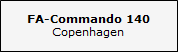
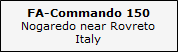
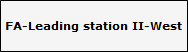
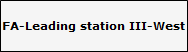
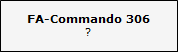
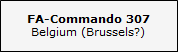
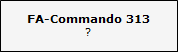
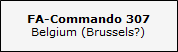
The front reconnaissance (FA) units West, commands and squads, were assigned to the corresponding staffs, resulting in the structure shown below. Unfortunately, this organizational chart is incomplete, as almost no records can still be found.
Units 124, 125, and 126 were deployed as “bandit reporting posts,” and units 127, 128, and 129 as radio-reporting posts for prepared intercept stations after being overrun during the retreat.
Together with the Command Reporting Area Vienna, they maintained connection to the radio networks of the Command Reporting Area Turkey (Middle East) and the Reporting Area Bulgaria.
The personnel strength of the radio station of a Front Reconnaissance Command was set in February 1944 by the Central Department of the Office of Foreign Affairs/Abwehr at an average of 1 officer, 1 sergeant, 3 corporals, and 7 radio operators. Commercial receivers were often used, such as the Siemens R-IV or the Philips HMZL.
On the transmitter side, frequency-variable types were generally used, mostly the S 89/80 and S 90/40. Unlike in the large radio centers in Hamburg or Belzig, at the radio reporting posts and the radio stations of the Abwehr commands, transmitters and receivers were often housed under one roof for reasons of space.
Radio station of a Front Reconnaissance Command with shortwave receiver Siemens R-IV (left) and transmitter SE 90/40.
For the larger radio stations of the Front Reconnaissance Commands, it was sometimes possible to procure Wehrmacht receivers of the types Kw.E.a and Fu.H.E.c, because these stations often had to monitor newly deployed radio agents for days or weeks and later also take over regular agent radio traffic.
In the organization further down and closer to the front, the Abwehr or Front Reconnaissance teams operated, which were usually attached to the staffs of the Army High Commands. According to the organizational directive of 25 February 1944 issued by OKW Office of Foreign Affairs/Abwehr, the radio crew of a team consisted of one corporal and three radio operators. Accordingly, the technical equipment was modest; a FAT radio trucks of the time, radio team Leopard. Such improvised radio trucks were built by rear-area Abwehr offices on their own initiative from passenger cars of all kinds, by removing half of the passenger compartment and replacing it with a small box-type structure as a radio cabin. The equipment consisted of an SE 85/14 with an inverter for connection to the car battery, or the Radione radio equipment set with the R 3 receiver and RS 20 transmitter.
At the lowest level of the Abwehr radio network were the frontline reporting posts and the radio agents, who were usually located in enemy territory. The reporting posts were deployed by the front reconnaissance teams at suitable locations along the front in order to smuggle agents through the front into enemy-held territory and, if possible, await their return. The reports brought back by the agents were then transmitted “to the rear” immediately by the reporting-post radio operators.
The author of this book was in the summer of 1944 a reporting-post radio operator in the area of the Pripyat Marshes. This region, named after the Pripyat River, located in the south of Belarus and the northwest of Ukraine, is with about 90,000 square kilometers, the largest swamp region in Europe. Because of the unclear front line there, the smuggling of agents was successful over a period of several weeks. After the breakthrough of Soviet troops through the Pripet Marshes, the author was transferred to an Afu school of Abwehr II in Klein-Gablau (today Jablowo), which belonged to a V-man camp in Preußisch-Stargard under the command of Lt. Göttler and was part of Front Reconnaissance Command 203, OTL Arnold, located in Lentschütz.
The superior Front Reconnaissance Headquarters II-East, OTL Ernst zu Eickern, had been located since mid-1944 in Bischofswiesen Castle near Bischofsfelden in the Warthegau.
After Abwehr II was taken over by the RSHA, the front reconnaissance units had to transfer younger personnel in particular to the “tank-hunting units” formed by Skorzeny that were operating behind Soviet lines.
Thus, around the turn of the year 1944/45, the author found himself once again serving as a radio operator with such a German-Russian suicide commando, under Red Army winter coats the Germans wore Wehrmacht uniforms, the Russians wore Red Army uniforms. The group was supposed to hide at temperatures of around –35° in a forest area called Lutauer Forst and allow itself to be overrun by the advancing Red Army.
What would have been necessary for tank hunting, explosives, detonators, ammunition, as well as spare batteries for the radio set, etc. was supposed to be delivered by airdrop.
The successful letting themselves be overrun was the first and last radio message the author was able to transmit, for after only a few days, the batteries of the SE 109/3 they carried had died due to the cold.
Because the resupply planned by airdrop also failed to arrive, the group began to retreat westward toward Danzig, about 50 km away.
By that time, the Red Army had already advanced several kilometers further west, and during the breakthrough from behind through the thinly manned Soviet lines, part of the unit was killed in a wild shootout.
The rest fought their way through to Danzig; there, the German Abwehr personnel were able to embark on one of the last ships crossing the Baltic Sea to Swinemünde and then on to Brandenburg, where the headquarters of Division Brandenburg was located. Taking the Russian soldiers along was strictly refused by the local command in Danzig, so they had to be left to their fate.
In Brandenburg were also the remnants of Front Reconnaissance Command 203, withdrawn from Preußisch-Stargard, including a radio station. This station had been able to maintain communication with three groups of agents dropped by parachute in 1944, two in Ukraine and one in Lithuania.
In February 1945, Lt. Mundhencke delivered the order from the Front Reconnaissance Headquarters I-East in Bad Elster to keep radio contact with these three groups under all circumstances—even after the end of the war. Only much later did it become known that General Gehlen intended to present these existing connections as a gift to the Americans. After Brandenburg became threatened by the Red Army, Front Reconnaissance Command 203, now commanded by Captain Conrady as OTL Arnold’s successor, relocated to Trittau, east of Hamburg and Lübeck, from where radio links to the three aforementioned groups actually continued until shortly after the capitulation.
Members of the front reconnaissance units who operated in civilian clothing or in approximated foreign uniforms did not carry military papers, but only the small cloth identification document, which was sewn into their clothing and well hidden.
With the invasion of France, the Abwehr organization that had been permanently stationed there during the occupation years—until then fully occupied with operations against the S.O.E., the Résistance, and the Red Orchestra—was again made mobile.
The front reconnaissance (FA) units West, commands and squads, were assigned to the corresponding staffs, resulting in the structure shown below. Unfortunately, this organizational chart is incomplete, as almost no records can still be found.
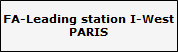

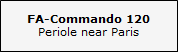








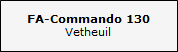

















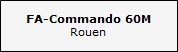
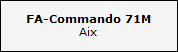


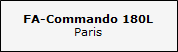



































Also operated an R-network (stay behind) with its front reconnaissance commands and units.
The networks of the Secret Radio Intelligence Service of the Abwehr described above i.e., of the German military intelligence service—served:
for the rapid transmission of secret messages from the Abwehr outposts, Abwehr commands, etc. to the Abwehr control centers and to the Office Foreign Affairs/Abwehr, but also by the fastest possible route to the Ic officers (enemy intelligence officers) of the higher and highest general staffs;
for directing the offices and units of Abwehr Groups I, II, and III and for ensuring their supply;
in part also for reporting evaluated reconnaissance results from the higher staffs back down to the subordinate command levels;
in part as a very well-functioning alternative network in case troop networks failed.
During the Second World War, the radio personnel of the Abwehr—deployed partly across all of Europe—suffered constantly from the lack of a cohesive organization and from being often merely tolerated or unwillingly ordered to be attached to foreign Wehrmacht units (Heldenklau!).
Only toward the end of the war were all Abwehr radio operators consolidated into Signals Regiment 506,a measure of which, for example, the author and many of his friends never learned.
From the few surviving strength reports and personnel allocations of individual Abwehr organizations in the Federal Archives/Military Archive in Freiburg, submitted to the later leadership of the RSHA, as well as from surveys of still-living friends from other contemporary Abwehr offices, the total strength of the radio personnel of the German military intelligence service, OKW Office Foreign Affairs/Abwehr, Group II, could be reconstructed as follows:
80 officers
730 non-commissioned officers
1850 radio operators
The intelligence operations involving agent radio against the territories controlled by the German Wehrmacht in the West can be understood within the context of the Anglo-American intelligence organizations. Of course, there were resistance groups and espionage operations from all occupied countries against Germany, and most were patriots of those nations, but without England and its support, none of these Western operations would have been conceivable.
The initial German Blitzkrieg overran the targeted countries so quickly that the forward-planned construction of so-called stay-behind networks (R-networks) was no longer possible, aside from the fact that, except in England and the Soviet Union, the use of shortwave radio for secret communications from territories occupied by Germany had hardly been planned.
The main tasks of all intelligence services, espionage (or reconnaissance) and counterintelligence (including counterespionage)—had been managed for centuries in England via large organizations in times of peace and war. Their names:
Secret Intelligence Service (SIS, later MI6) for intelligence collection, and
Security Service (later MI5) for counterintelligence are well known.
During World War II, numerous secret organizations with special tasks were added, e.g., MI8 for radio monitoring against Germany, including the Radio Security Service, MI8-C or RSS and MI9 for returning downed airmen from occupied and neutral countries back to England.
Within MI6, there were later, just as in the German Abwehr from 1938, sub-organizations for underground activities (SO1) and sabotage (SO2).
Naturally, MI6 also deployed agents and radio agents for espionage before and during the war, but the British intelligence service possessed, through its extensive and extraordinarily successful radio monitoring and the codebreaking center at Bletchley Park, a first-hand intelligence source, material whose volume, timeliness, and importance no agent organization, however large, could have matched.
And because they could also read the radio messages of the German Abwehr, they could theoretically have dispensed with many special counterespionage operations—but they did not, so as not to reveal their successful penetration of the German Enigma cipher keys.
The Radio Section of the MI6 headquarters in Whaddon Hall developed numerous types of shortwave devices, operated a radio network for its own radio agents, and—using Windy Ridge near Whaddon Park as the control center—ran a highly secret radio network for the rapid and secure transmission of deciphered and evaluated Wehrmacht radio messages by the X codebreaking service.
Recipients of these ULTRA messages were the Special Liaison Units (SLU), specially established and shielded liaison offices at the highest Anglo-American command staffs.
The technical component of this secret radio network, the Special Communication Units (SCU), consisted of more than 40 mobile outstations, equipped with National HRO or RCA AR-88 receivers and shortwave transmitters of the Mark III type (CO-PA with 6V6 and 807 tubes), designed and built by the Special Communications Factory.
After their countries were occupied, governments or military organizations that had fled to England created their own liberation movements, which placed themselves at the disposal of British intelligence—naturally expecting assistance for future operations.
Concerns about secrecy, and suspicion of sabotage operations—which could endanger clandestine agents—led the British wartime leadership and the venerable SIS to create a special organization for these new tasks and to support it during its early development.
Occasionally, friction arose between this new organization, the Special Operations Executive (S.O.E.), MI6, and the individual national resistance movements.
By 1940 the British Secret Service had hardly any intact covert networks on the continent, and only during the Norway operation did British commando units appear. These were to become the founding core of the S.O.E. from 19 July 1940 onward.
In France alone, the S.O.E. supported four different organizations:
* F-Section (Interallié),
* DF-Section (evacuation of downed airmen),
* EU/P-Section (Polish patriots in northern France), and the more independent B.C.R.A. (Bureau Central de
Renseignements et d’Action) under “Colonel Passy.”
There were also the N-Section (Netherlands), H-Section (Italy, Iberia), T-Section (Belgium), X-Section (Germany), and further sections for Norway (Milorg), Czechoslovakia, Yugoslavia, and the Middle and Far East.
The S.O.E. operated 60 schools worldwide, with over 7500 graduates for Western Europe and 4000 graduates for Mediterranean and Southeast operations.
Fast boats, submarines, and fishing vessels deployed agents and radio agents along Europe’s occupied coastlines. The so-called Shetland Bus completed 40 missions by 1942, transporting 43 S.O.E. agents with 150 tons of supplies, and carried out 80 missions without losses in the winter of 1942/43.
Using two- and four-engine bombers, the 161st Squadron (“Moon Squadron”), based in Tempsford, deployed agents and material by parachute for SIS and S.O.E. at previously agreed radio-marked drop zones. They also used single-engine Westland Lysander Mk II and twin-engine Lockheed Hudson Mk I aircraft to deliver and retrieve agents and weapons.
From January 1944 onward, 35 of these aircraft carried out 8561 parachute operations, deploying 868 agents and 8545 tons of supplies.
During the early period, the S.O.E. used the SIS radio center, but after establishing its own network and control stations from mid-1942 onward, the radio traffic was separated.
The S.O.E. operated four different shortwave central stations:
53-A — Grendon
53-B — Poundon
53-C — Bicester
53-D — Dunbar/Scotland
Station 53-B/Poundon, affectionately called “Home Station” or “Station Charlie” by the agent groups, was the largest.
It consisted of a transmitting center in Poundon and a separate, camouflaged receiving station from which the transmitters were remote-keyed.
Initially equipped with Marconi CR-100 receivers, it later used primarily the U.S. HQ-120X, HRO-5, and especially AR-88 receivers.
Each receiving position had a Creed wire recorder, and all receivers could be connected to the antennas via isolation amplifiers and an antenna-switching field.
Around 50 radio operators per shift (mostly members of the women’s auxiliary corps) operated the station, communicating with up to 100 different clandestine shortwave stations.
The transmitting facility covered 125 acres, equipped with 34 folded dipoles and 7 rhombic antennas—30 directed east, 4 southeast, 4 northeast, and 3 south.
The rhombic antennas were used especially for communication with Yugoslavia, Greece, and the Middle and Far East.
Fifty shortwave transmitters with 250-watt output (CO-PA with 807 and 813 tubes) and one 15-kW transmitter for extremely poor propagation conditions were available via an antenna control matrix.
Equipment and radio sets were designed and built for the S.O.E.’s Signals Directorate by its own technical bureau, the Inter-Services Research Bureau (ISRB) in St. Albans.
For similar operations against the Axis powers, the Office of Strategic Services (OSS) was built up in the United States from 1941 onward, with help from the Military Intelligence Division (G2), the Office of Naval Intelligence (ONI), and in cooperation with the British Security Council (BSC). It was officially founded in June 1942 and specifically recruited Franco-Canadians for the S.O.E.
By summer 1942, the first OSS agents appeared in France.
The OSS radio stations used the British S.O.E. Home Station, and before the invasion there was close cooperation in the “Special Forces,” later expanded through the large Jedburgh network.
From mid-1944 onward, all resistance organizations in France were consolidated into the FFI companies (French Forces of the Interior), and the U.S. Special Air Service also participated in aerial supply.
The British MI6 deployed 50 mixed teams in Operation Sussex, each 2-man teams equipped with shortwave radio, to observe German troop withdrawals.
These teams used the most modern radio sets of the time: the Mark-21, with ten 1.4-volt miniature tubes.
Whereas on the Western front several hundred clandestine radio stations operated at times—run by the Anglo-American intelligence services and resistance movements of the occupied territories—many of which were detected, monitored, or silenced by German radio counterintelligence, on the Eastern “radio battlefield,” from 1944 onward, several thousand radio stations were active.
Against this overwhelming number, German radio counterintelligence could achieve no significant successes.
Before the outbreak of war in 1941, the intelligence services of the USSR, especially the Comintern organization—operated 18 clandestine shortwave stations in Germany, with a control center in Moscow.
In addition, the military intelligence service GRU of the Red Army had prepared a large shortwave network that began operating immediately after the outbreak of war, with up to 78 identified stations.
By July 1942 there were 325 transmitters, and the number rose sharply as partisan units with radio links were added to the agent groups.
By 1944 about 2000 stations were active.
The central station for the southern groups was located in Astrakhan, east of the Volga, and the largest control center was in Moscow.
The latter ceased operations on 19 October 1941 due to the approaching front and was moved to Kuibyshev, where it resumed radio operations at the end of November 1941.
Before the Red Army could advance its paratroop flight range into German territory, it accepted help from the British intelligence services, and agent groups were transported to England via convoy routes from Murmansk.
In early 1942 such groups, equipped with British radio sets, reached Germany via the 138th Bomber Squadron.
Another deployment succeeded on 24 February 1943 using Wellington bombers in Burgenland, Austria, equipped with British B Mk-II radio sets.
The American OSS also assisted the USSR in this way and, near the end of the war, even deployed communist radio agents equipped with the newest Joan-Eleanor voice-radio system.
After the war, Soviet intelligence immediately took an interest in this device and its ciphering methods; the contemporary radio agent Anton Ruh had hidden the equipment on a garden plot in Berlin-Wartenberg—he later became a well-known politician and East German ambassador to Romania.
Source: Rudolf Staritz
Translation: Chat-GPT.
for the rapid transmission of secret messages from the Abwehr outposts, Abwehr commands, etc. to the Abwehr control centers and to the Office Foreign Affairs/Abwehr, but also by the fastest possible route to the Ic officers (enemy intelligence officers) of the higher and highest general staffs;
for directing the offices and units of Abwehr Groups I, II, and III and for ensuring their supply;
in part also for reporting evaluated reconnaissance results from the higher staffs back down to the subordinate command levels;
in part as a very well-functioning alternative network in case troop networks failed.
During the Second World War, the radio personnel of the Abwehr—deployed partly across all of Europe—suffered constantly from the lack of a cohesive organization and from being often merely tolerated or unwillingly ordered to be attached to foreign Wehrmacht units (Heldenklau!).
Only toward the end of the war were all Abwehr radio operators consolidated into Signals Regiment 506,a measure of which, for example, the author and many of his friends never learned.
From the few surviving strength reports and personnel allocations of individual Abwehr organizations in the Federal Archives/Military Archive in Freiburg, submitted to the later leadership of the RSHA, as well as from surveys of still-living friends from other contemporary Abwehr offices, the total strength of the radio personnel of the German military intelligence service, OKW Office Foreign Affairs/Abwehr, Group II, could be reconstructed as follows:
80 officers
730 non-commissioned officers
1850 radio operators
The intelligence operations involving agent radio against the territories controlled by the German Wehrmacht in the West can be understood within the context of the Anglo-American intelligence organizations. Of course, there were resistance groups and espionage operations from all occupied countries against Germany, and most were patriots of those nations, but without England and its support, none of these Western operations would have been conceivable.
The initial German Blitzkrieg overran the targeted countries so quickly that the forward-planned construction of so-called stay-behind networks (R-networks) was no longer possible, aside from the fact that, except in England and the Soviet Union, the use of shortwave radio for secret communications from territories occupied by Germany had hardly been planned.
The main tasks of all intelligence services, espionage (or reconnaissance) and counterintelligence (including counterespionage)—had been managed for centuries in England via large organizations in times of peace and war. Their names:
Secret Intelligence Service (SIS, later MI6) for intelligence collection, and
Security Service (later MI5) for counterintelligence are well known.
During World War II, numerous secret organizations with special tasks were added, e.g., MI8 for radio monitoring against Germany, including the Radio Security Service, MI8-C or RSS and MI9 for returning downed airmen from occupied and neutral countries back to England.
Within MI6, there were later, just as in the German Abwehr from 1938, sub-organizations for underground activities (SO1) and sabotage (SO2).
Naturally, MI6 also deployed agents and radio agents for espionage before and during the war, but the British intelligence service possessed, through its extensive and extraordinarily successful radio monitoring and the codebreaking center at Bletchley Park, a first-hand intelligence source, material whose volume, timeliness, and importance no agent organization, however large, could have matched.
And because they could also read the radio messages of the German Abwehr, they could theoretically have dispensed with many special counterespionage operations—but they did not, so as not to reveal their successful penetration of the German Enigma cipher keys.
The Radio Section of the MI6 headquarters in Whaddon Hall developed numerous types of shortwave devices, operated a radio network for its own radio agents, and—using Windy Ridge near Whaddon Park as the control center—ran a highly secret radio network for the rapid and secure transmission of deciphered and evaluated Wehrmacht radio messages by the X codebreaking service.
Recipients of these ULTRA messages were the Special Liaison Units (SLU), specially established and shielded liaison offices at the highest Anglo-American command staffs.
The technical component of this secret radio network, the Special Communication Units (SCU), consisted of more than 40 mobile outstations, equipped with National HRO or RCA AR-88 receivers and shortwave transmitters of the Mark III type (CO-PA with 6V6 and 807 tubes), designed and built by the Special Communications Factory.
After their countries were occupied, governments or military organizations that had fled to England created their own liberation movements, which placed themselves at the disposal of British intelligence—naturally expecting assistance for future operations.
Concerns about secrecy, and suspicion of sabotage operations—which could endanger clandestine agents—led the British wartime leadership and the venerable SIS to create a special organization for these new tasks and to support it during its early development.
Occasionally, friction arose between this new organization, the Special Operations Executive (S.O.E.), MI6, and the individual national resistance movements.
By 1940 the British Secret Service had hardly any intact covert networks on the continent, and only during the Norway operation did British commando units appear. These were to become the founding core of the S.O.E. from 19 July 1940 onward.
In France alone, the S.O.E. supported four different organizations:
* F-Section (Interallié),
* DF-Section (evacuation of downed airmen),
* EU/P-Section (Polish patriots in northern France), and the more independent B.C.R.A. (Bureau Central de
Renseignements et d’Action) under “Colonel Passy.”
There were also the N-Section (Netherlands), H-Section (Italy, Iberia), T-Section (Belgium), X-Section (Germany), and further sections for Norway (Milorg), Czechoslovakia, Yugoslavia, and the Middle and Far East.
The S.O.E. operated 60 schools worldwide, with over 7500 graduates for Western Europe and 4000 graduates for Mediterranean and Southeast operations.
Fast boats, submarines, and fishing vessels deployed agents and radio agents along Europe’s occupied coastlines. The so-called Shetland Bus completed 40 missions by 1942, transporting 43 S.O.E. agents with 150 tons of supplies, and carried out 80 missions without losses in the winter of 1942/43.
Using two- and four-engine bombers, the 161st Squadron (“Moon Squadron”), based in Tempsford, deployed agents and material by parachute for SIS and S.O.E. at previously agreed radio-marked drop zones. They also used single-engine Westland Lysander Mk II and twin-engine Lockheed Hudson Mk I aircraft to deliver and retrieve agents and weapons.
From January 1944 onward, 35 of these aircraft carried out 8561 parachute operations, deploying 868 agents and 8545 tons of supplies.
During the early period, the S.O.E. used the SIS radio center, but after establishing its own network and control stations from mid-1942 onward, the radio traffic was separated.
The S.O.E. operated four different shortwave central stations:
53-A — Grendon
53-B — Poundon
53-C — Bicester
53-D — Dunbar/Scotland
Station 53-B/Poundon, affectionately called “Home Station” or “Station Charlie” by the agent groups, was the largest.
It consisted of a transmitting center in Poundon and a separate, camouflaged receiving station from which the transmitters were remote-keyed.
Initially equipped with Marconi CR-100 receivers, it later used primarily the U.S. HQ-120X, HRO-5, and especially AR-88 receivers.
Each receiving position had a Creed wire recorder, and all receivers could be connected to the antennas via isolation amplifiers and an antenna-switching field.
Around 50 radio operators per shift (mostly members of the women’s auxiliary corps) operated the station, communicating with up to 100 different clandestine shortwave stations.
The transmitting facility covered 125 acres, equipped with 34 folded dipoles and 7 rhombic antennas—30 directed east, 4 southeast, 4 northeast, and 3 south.
The rhombic antennas were used especially for communication with Yugoslavia, Greece, and the Middle and Far East.
Fifty shortwave transmitters with 250-watt output (CO-PA with 807 and 813 tubes) and one 15-kW transmitter for extremely poor propagation conditions were available via an antenna control matrix.
Equipment and radio sets were designed and built for the S.O.E.’s Signals Directorate by its own technical bureau, the Inter-Services Research Bureau (ISRB) in St. Albans.
For similar operations against the Axis powers, the Office of Strategic Services (OSS) was built up in the United States from 1941 onward, with help from the Military Intelligence Division (G2), the Office of Naval Intelligence (ONI), and in cooperation with the British Security Council (BSC). It was officially founded in June 1942 and specifically recruited Franco-Canadians for the S.O.E.
By summer 1942, the first OSS agents appeared in France.
The OSS radio stations used the British S.O.E. Home Station, and before the invasion there was close cooperation in the “Special Forces,” later expanded through the large Jedburgh network.
From mid-1944 onward, all resistance organizations in France were consolidated into the FFI companies (French Forces of the Interior), and the U.S. Special Air Service also participated in aerial supply.
The British MI6 deployed 50 mixed teams in Operation Sussex, each 2-man teams equipped with shortwave radio, to observe German troop withdrawals.
These teams used the most modern radio sets of the time: the Mark-21, with ten 1.4-volt miniature tubes.
Whereas on the Western front several hundred clandestine radio stations operated at times—run by the Anglo-American intelligence services and resistance movements of the occupied territories—many of which were detected, monitored, or silenced by German radio counterintelligence, on the Eastern “radio battlefield,” from 1944 onward, several thousand radio stations were active.
Against this overwhelming number, German radio counterintelligence could achieve no significant successes.
Before the outbreak of war in 1941, the intelligence services of the USSR, especially the Comintern organization—operated 18 clandestine shortwave stations in Germany, with a control center in Moscow.
In addition, the military intelligence service GRU of the Red Army had prepared a large shortwave network that began operating immediately after the outbreak of war, with up to 78 identified stations.
By July 1942 there were 325 transmitters, and the number rose sharply as partisan units with radio links were added to the agent groups.
By 1944 about 2000 stations were active.
The central station for the southern groups was located in Astrakhan, east of the Volga, and the largest control center was in Moscow.
The latter ceased operations on 19 October 1941 due to the approaching front and was moved to Kuibyshev, where it resumed radio operations at the end of November 1941.
Before the Red Army could advance its paratroop flight range into German territory, it accepted help from the British intelligence services, and agent groups were transported to England via convoy routes from Murmansk.
In early 1942 such groups, equipped with British radio sets, reached Germany via the 138th Bomber Squadron.
Another deployment succeeded on 24 February 1943 using Wellington bombers in Burgenland, Austria, equipped with British B Mk-II radio sets.
The American OSS also assisted the USSR in this way and, near the end of the war, even deployed communist radio agents equipped with the newest Joan-Eleanor voice-radio system.
After the war, Soviet intelligence immediately took an interest in this device and its ciphering methods; the contemporary radio agent Anton Ruh had hidden the equipment on a garden plot in Berlin-Wartenberg—he later became a well-known politician and East German ambassador to Romania.
Source: Rudolf Staritz
Translation: Chat-GPT.
weggum.com